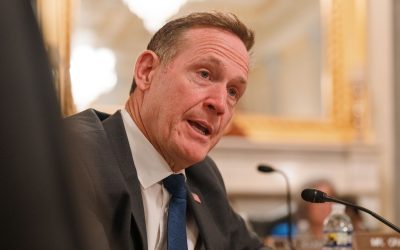


Washington, D.C. — U.S. Senator Ted Budd (R-N.C.) led several of his Senate colleagues in introducing the Farmworker Access and Retention Modernization (FARM) Stability Act today, which would codify the U.S. Department of Labor’s (DOL) initiative to stabilize agricultural labor costs. This legislation aims to provide farmers with greater certainty and clarity when forecasting labor costs as they plan for future growing seasons.
“As labor costs continue to climb, our nation’s farmers and ranchers deserve to know the price tag associated with keeping their operations going. Agriculture is North Carolina’s leading industry and a cornerstone of our economy, but without a stable, reliable workforce, our producers cannot plan, threatening both their livelihoods and our nation’s food supply. The DOL has helped provide farmers with the transparency they deserve, but now we must ensure agricultural labor costs remain affordable by passing the FARM Stability Act,” said Senator Budd.
“Farmers are extremely resourceful and resilient, but their success depends on circumstances beyond their control. Ensuring they can secure a dependable agriculture workforce will lift a major burden on them and help provide needed certainty. I’m proud to join Senator Budd in championing the FARM Stability Act to bring reliable and affordable labor to farm operations across the country,” said Senator Boozman.
“Farmers across South Carolina have been struggling with skyrocketing labor costs and an Adverse Effect Wage Rate that simply hasn’t reflected reality. That’s why I’m helping to lead the FARM Stability Act, which establishes a clear, fair, and consistent wage rate for agricultural workers. These reforms will help deliver the stability and predictability our farmers need to keep feeding our nation, while continuing to protect wages in the H-2A program,” said Senator Scott.
“The skyrocketing labor costs hitting Mississippi farmers are threatening their operations and their ability to put food on American tables. The FARM Stability Act takes the commonsense step of locking in the Trump administration’s reforms to the H-2A wage methodology, so farmers can plan ahead without fear that the next administration will pull the rug out from under them. I’m proud to join Senator Budd on this effort to provide relief and certainty to our producers who are burdened with costly regulatory overreach from previous administrations,” said Senator Hyde-Smith.
“Codifying the Department of Labor’s recent updates to the AEWR would help clarify and stabilize wages in the H-2A agricultural labor program. A clear, consistent wage standard protects agricultural employers from uncertainty in year-to-year rule changes, helping both our workforce and our farmers, and keeping food on Americans’ tables,” said Senator Crapo.
“When agriculture thrives, Nebraska thrives. The FARM Stability Act ensures that Nebraska farmers and ranchers can confidently plan for growing season. Nebraska’s future depends on certainty for farmers, ranchers, and agri-business. The FARM Stability Act supports agriculture today and provides long-term stability for producers,” said Senator Ricketts.
“The FARM Stability Act delivers the certainty our farmers need by bringing clarity and predictability to the H-2A wage process. By codifying the Department of Labor’s approach, this commonsense legislation helps stabilize labor costs, strengthen our agricultural workforce, and ensure North Carolina’s farmers can continue to feed and fuel our nation,” said Senator Tillis.
“Our nation’s producers work sunup to sundown to fuel our economy, communities, and families. As a lifelong rancher, I know the ag industry is never easy work. I’m proud to join my Republican colleagues on the FARM Stability Act, delivering much-needed clarity and financial relief so Wyoming’s farmers and ranchers can plan growing and grazing seasons with confidence as labor costs level out,” said Senator Lummis.
U.S. Senators Tim Scott (R-S.C.), Cindy Hyde-Smith (R-Miss.), John Boozman (R-Ark.), Mike Crapo (R-Idaho), Pete Ricketts (R-Neb.), Thom Tillis (R-N.C.), Cynthia Lummis (R-Wyo.), and Roger Wicker (R-Miss.) joined in introducing the legislation.
The FARM Stability Act is supported by: Agricultural Workforce Coalition, Turfgrass Producers International, Tobacco Associates, Inc., U.S. Tobacco Cooperative, North Carolina Farm Bureau, NC Chamber, NC Agribusiness Council, NC Ag Partnership, NC Sweet Potato Commission, Tobacco Growers Association of North Carolina, North Carolina Growers Association, North Carolina Apple Growers Association, Blue Ridge Apple Growers Association, Hilltop Farm WNC LLC, AgCarolina Farm Credit, AgSouth Farm Credit, North Carolina Blueberry Council, NC Christmas Tree Association, NC Cotton Producers Association, North Carolina Greenhouse Vegetable Growers Association, Inc., NC Nursery and Landscape Association, North Carolina Peanut Growers Association, NC Soybean Producers Association, North Carolina Strawberry Association, North Carolina Vegetable Growers Association, North Carolina Watermelon Association, North Carolina Tomato Growers Association, and theNorth Carolina Sod Producers Association.
“The Ag Workforce Coalition appreciates Senator Budd’s leadership and his effort to codify the Administration’s interim final rule on H-2A wages. Wage reform is one critical aspect of needed changes to the H-2A program to ensure farmers, growers, and ranchers can continue to feed this nation. As the needs of labor-intensive agriculture continue to grow nationwide, we look forward to working with Congress to achieve lasting program reforms as quickly as possible,” said the Agriculture Workforce Coalition.
“We strongly support the FARM Stability Act as a practical and necessary step to help specialty crop producers across the Southeast remain competitive. Unpredictable labor costs have become a serious obstacle for farms trying to plan ahead, maintain stable employment, and compete in a global market. More importantly, instability inhibits the next generation’s ability to invest into their farm’s future. By bringing greater certainty to agricultural labor policy, this bill addresses a core challenge facing growers while helping protect the rural economies that agriculture sustains and the legacy of farm families across the nation,” said Kimberly Foley, Executive Director, Tobacco Associates, Inc.
“The FARM Stability Act would help farmers in North Carolina and across the U.S. secure the critical workforce they need to grow our food and fiber. Sen. Budd has our deepest appreciation for recognizing the importance of giving farmers certainty regarding their labor needs and introducing this meaningful legislation,” said Shawn Harding, President, North Carolina Farm Bureau.
“The NC Chamber applauds Senator Budd’s efforts to bring common sense reform to amending the Adverse Effect Wage Rate determining methodology. These changes will provide farmers predictability and clarity on seasonal operating costs, which will enhance North Carolina’s agricultural industry,” said Jake Cashion, Vice President of Government Affairs, NC Chamber.
“The FARM Stability Act is a critically important piece of legislation that will not only help North Carolina’s farmers, but the entire agricultural industry. The NC Agribusiness Council applauds Sen. Budd’s efforts to bring stability to the Adverse Effect Wage Rate,” said Jeffery C. Lee, President, North Carolina Agribusiness Council.
“The North Carolina Ag Partnership strongly supports Senator Budd’s legislation to address the Adverse Effect Wage Rate. Our state’s farmers are facing rising and unpredictable labor costs that threaten their ability to operate and compete. This bill provides needed stability to sustain their operations and continue feeding our communities and nation,” said Peter Daniel, Chairman, NC Ag Partnership.
“The economic stakes for American farmers are enormous not just for their individual farms, but for the rural economies they support, food processing infrastructure, exporters, and consumers nationwide. Our farmers are united in calling for practical, commonsense changes: to ensure a stable labor supply, protect American competitiveness, and sustain the vibrant economic engine that agriculture represents. When we stand together; growers, associations, community leaders, and policymakers, we can build solutions that reflect the scale of this challenge and secure the future of American agriculture. The North Carolina Sweetpotato Commission applauds Sen. Budd’s effort to codify the Administration’s interim final rule and deliver permanence and stability to the Adverse Effect Wage Rate. Our national security depends on our food security, and a stable, predictable labor force ensures our food security will continue as it has for the last 250 years,” said Michelle L. Grainger, Executive Director, North Carolina Sweetpotato Commission.
“As a third generation farmer in Western North Carolina, I know firsthand that stability and predictability are critical to the success of American agriculture. Farming is filled with uncertainties, from weather to markets, labor does not have to be one of them. I support the FARM Stability Act and thank Senator Budd for his work on this critical issue. On my farm and across the country, labor is one of our biggest challenges. Recent changes to the Adverse Effect Wage Rate methodology were a step in the right direction, now it is time to carry agricultural labor reform across the finish line. Farmers and employees need a transparent framework that uses credible data, accounts for total compensation and limits year to year wage spikes,” said Linda Pryor, Manager, Hilltop Farm WNC LLC.
Read the full bill text HERE.
BACKGROUND
Farmers have been grappling with rapidly rising labor costs, driven in large part by the mismanagement of calculating the Adverse Effect Wage Rate (AEWR) used in the H-2A Temporary Agricultural Worker program. Last October, DOL sought to address this concern by issuing an Interim Final Rule (IFR). This rule established an annual adjustment to the hourly AEWR and created separate wage scales for entry-level and experienced H–2A workers, providing much-needed clarity for the agricultural industry.
To ensure the future stabilization of agricultural labor costs, the FARM Stability Act would:
- Codify DOL’s Compensation Adjustment Factor for the AEWR.
- Ensure that housing provided by farm operators is adequately considered when determining the AEWR.
- Codify the Two-Tiered Wage Scale.
- Ensure that both entry-level and experienced agricultural workers are fairly compensated for their labor.
###