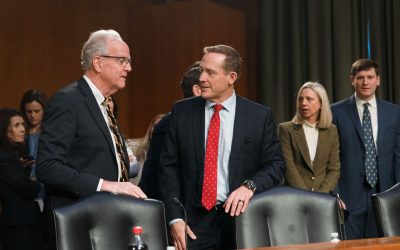


Washington, D.C. — U.S. Senators Ted Budd (R-N.C.) and Amy Klobuchar (D-Minn.), co-chairs of the Senate Next Generation 9-1-1 Caucus and members of the Senate Commerce, Science, and Transportation Committee, were joined by Senator Catherine Cortez Masto (D-Nev.) in introducing the bipartisan Next Generation 9-1-1 Act to accelerate federal efforts to modernize our nation’s outdated 9-1-1 systems. This bill provides funding to state and local governments to deploy modern technology upgrades at 9-1-1 call centers to enable operators to utilize text messages, pictures, videos, and other information sent by smartphones, tablets, and other devices during an emergency.
“Our nation’s 9-1-1 call centers are on the front lines of emergency response, but outdated technologies have limited the ability of operators to best assist callers in crisis and support first responders in the field. It’s time to bring 9-1-1 systems into the digital age so emergency personnel can respond faster and more effectively to medical emergencies, crimes, and natural disasters in our communities. I am proud to join Senators Klobuchar and Cortez Masto in introducing practical legislation to modernize our 9-1-1 systems to meet the demands of the 21st Century and help save lives,” said Senator Budd.
“Infrastructure is more than just roads and bridges—it also includes critical technologies. We must bring our 9-1-1 systems into the 21st century by providing state and local governments with the resources they need to update our emergency response networks and keep our communities safe. In a crisis, no one should be put in danger because of outdated 9-1-1 systems, and first responders, public safety officials, and law enforcement must be able to communicate seamlessly. This legislation will enable them to do just that,” said Senator Klobuchar.
“Recent communications technology advancements have helped us stay connected and support our first responders. Unfortunately, our 9-1-1 systems haven’t kept up. This bipartisan legislation will support updated networks that improve safe and efficient responses to Nevadans facing emergencies,” said Senator Cortez Masto.
The Next Generation 9-1-1 Act is led by Representatives Richard Hudson (R-N.C.-09) and Troy Carter (D-La.-02) in the U.S. House of Representatives.
The bill is endorsed by the Association of Public-Safety Communication Officials (APCO) International, the National Emergency Number Association (NENA), the National Association of State 911 Administrators (NASNA), the Public Safety Next Generation 9-1-1 Coalition, and Intrado.
“NG9-1-1 is more than an upgrade in technology; it is a commitment to saving lives and strengthening public safety. Senators Klobuchar, Budd and Cortez Masto’s leadership in introducing the Next Generation 9-1-1 Act moves the country closer to a fully interoperable, reliable, innovative 9-1-1 environment, and we extend our sincere appreciation for their dedication to the advancement of public safety communications,” said Jack Varnado, President, APCO International.
“We thank Senators Klobuchar, Budd, and Cortez-Masto for their leadership on this legislation, which is essential and long overdue. Every delay in meaningful federal funding for 9-1-1 leaves local governments struggling to do two difficult things at once: maintain aging, legacy 9-1-1 systems and make progress toward 21st-century, lifesaving NG9-1-1. We call on Congressional leaders to act quickly on this legislation and to provide initial funding to ensure that every community has digital, interoperable 9-1-1 infrastructure—covering everyone from citizens in crisis, to the first responders in 9-1-1 centers, to police, fire, and emergency medical responders in the field,” said John Provenzano, Chief Executive Officer, NENA.
“Where you are located in the U.S. should not determine what level of emergency response Americans receive when an emergency strikes. But today, too many localities and communities lack the resources necessary to transition fully to Next Generation 911. Ensuring that every state in our nation can implement this critical public safety technology is paramount to our national security and public safety. We are grateful to the bipartisan leaders in the Senate, including Senator Klobuchar, Senator Budd, and Senator Cortez Masto, for supporting this legislation. Thank you, Senators, for working to keep our nation safe,” said L.V. Pokey Harris, President, NASNA.
“Modernizing our nation’s decades-old 9-1-1 systems to NG9-1-1 is a national security and public safety imperative. True, end-to-end, nationwide NG9-1-1 implementation will ensure that all communities have access to modern, reliable emergency communications services. The Coalition thanks Senators Klobuchar, Budd and Cortez Masto for their leadership in introducing this important legislation and advancing a framework to support nationwide NG9-1-1 deployment that aligns with the needs of the public safety community,” said Mel Maier, Spokesman, Public Safety Next Generation 9-1-1 Coalition.
“Next Generation 9-1-1 is a national public safety priority. We are grateful to Senator Klobuchar, Senator Budd, and Senator Cortez Masto for their leadership and commitment to this critical issue. Next Generation 9-1-1 supports tools and technologies that will save lives and will protect our critical infrastructure from foreign threats and cyberattacks. Now more than ever, Americans need robust, reliable, secure, and resilient 9-1-1 and we are eager to see this legislation move forward,” said Brian Davenport, Chief Strategy Officer, Intrado.
Read the full bill text HERE.
###