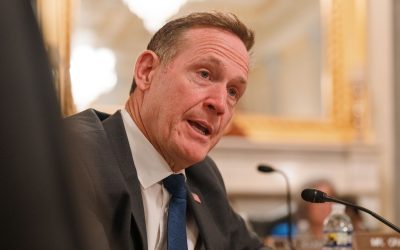


Washington, D.C. — U.S. Senator Ted Budd (R-N.C.), a member of the Senate Commerce, Science, and Transportation Committee, secured two of his bills as provisions in the Weather Research and Forecasting Innovation Reauthorization Act of 2026, which was unanimously passed out of committee last week. The two Budd-led provisions include the Hurricane Forecast Improvement Program and the Radar Next Program.
“For well over a year, I have worked with local, state, and federal officials to coordinate recovery efforts for Western North Carolina following Hurricane Helene. Through my efforts, I have identified significant gaps in our weather system that must be addressed to ensure future storms are tracked as effectively and efficiently as possible, preventing loss of life and property. Following storms of mass destruction, we can only learn to be better prepared. I am proud that two of my bills have been included as provisions to this year’s Weather Act to enhance the accuracy of hurricane forecasts, predictions, and warnings, and modernize our radar technology to increase warning lead times. We cannot afford to be unprepared when the next great storm strikes,” said Senator Budd.
Read the full bill text HERE.
BACKGROUND
The Weather Act updates the National Oceanic and Atmospheric Administration’s (NOAA) research and forecasting programs to ensure the agency remains focused on public safety by modernizing weather systems and upgrading critical safety systems.
Below is a summary of the Budd-led provisions included in the final package of the Weather Act:
Hurricane Forecast Improvement Program Enhancement Act:
- Enhances the Hurricane Forecast Improvement Program at NOAA by developing and extending accurate hurricane forecasts, predictions, and warnings to reduce loss of life, injury, and damage to the economy. This legislative provision would:
- Improve the prediction of rapid intensification and the track of hurricanes;
- Improve the forecast and communication of storm surges from hurricanes;
- Incorporate risk communication research to create more effective watch and warning products; and
- Evaluate and incorporate innovative observations, including acoustic or infrasonic measurements.
Radar Next Program Act:
- Establishes at NOAA the Radar Next Program, which will carry out the planning and deployment of the next generation weather radar system in the United States.
- Directs NOAA to develop a plan to replace the aging Doppler radar network and implement the replacement plan by the end of fiscal year 2040.
- Requires the development of a phased array radar test, which can scan the atmosphere in under a minute, six times faster than current Doppler radars, detecting rapid changes in storms that allow for increased warning lead times and fewer false alarms.
- Gives NOAA the authority to contract with third parties to fill data gaps in weather radar coverage by acquiring data, services, and technologies.
###