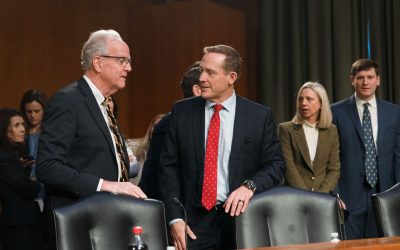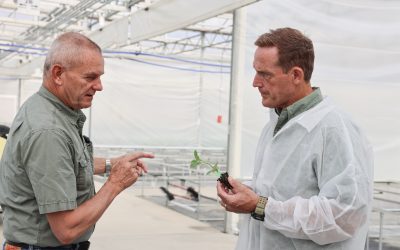


Washington, D.C. — U.S. Senators Ted Budd (R-N.C.) and John Fetterman (D-Pa.) introduced the National Programmable Cloud Laboratories Network Act to create a national network of six remotely accessible programmable cloud laboratories (PCLs) for academic research, led by the National Science Foundation (NSF). By joining existing laboratory data processing power together, this bill would help researchers use their time and financial resources more effectively through automation and integration of large data sets.
“Integrating our nation’s world class laboratories will increase the rate of breakthroughs, streamline and better automate the research process, and reduce the barriers and costs that throttle experimentation. North Carolina is at the cutting edge of innovation, and I am glad to work with Senator Fetterman to help our great institutions push the boundaries of discovery even further,” said Senator Budd.
“Pennsylvania is home to thousands of academic and industry researchers that are expanding the boundaries of human knowledge and developing the products of the future. We can help cut barriers researchers face and supercharge America’s innovation engine with a national network of PCLs. This has never been built before, and I’m proud to partner with Senator Budd to make this a reality,” said Senator Fetterman.
The National Programmable Cloud Laboratories Network Act is endorsed by SeedAI, the Allegheny Conference on Community Development, and Carnegie Mellon University.
Read the full bill text HERE.
BACKGROUND
The high cost of building and maintaining laboratory infrastructure creates barriers for smaller, less endowed academic institutions and small businesses to conduct cutting-edge scientific research or develop innovative products. A national PCL network would allow fee-paying users to remotely access laboratory space to conduct experiments, instead of building and operating their own lab equipment or traveling to another institution to conduct experiments in-person.
This legislation would codify existing NSF proposals to create a network of up to six PCL nodes through a competitive selection process open to academic, private sector, non-profit research institutions, or partnerships between any of the three prior types of institutions. Applicants for PCL node designation would be evaluated on:
- The level of existing laboratory infrastructure with automated capabilities and data integration;
- Capacity to support cloud-enabled workflows for multiple users;
- Ability to sustain long-term operations without continuous federal funding;
- Ability to collaborate with partners in academia, industry, or federal research entities;
- Protocols for research security, cybersecurity, and responsible access;
- Demonstration of user interest and research needs.
Following the designation of the nodes, standards for interoperability, data sharing, cybersecurity, and technical requirements would be developed by the National Institute of Standards and Technology (NIST), NSF, and selected PCL node participants. Reports to Congress on non-designated laboratories would also be required to map out developing PCL research infrastructure, assess the capabilities of non-designated laboratories, and identify opportunities for collaboration with the selected nodes.
###